
Why we use AI to make a show about thinking for yourself
History Talks Back tells children not to take its word for anything. Yet AI writes it, and AI makes most of its voices.
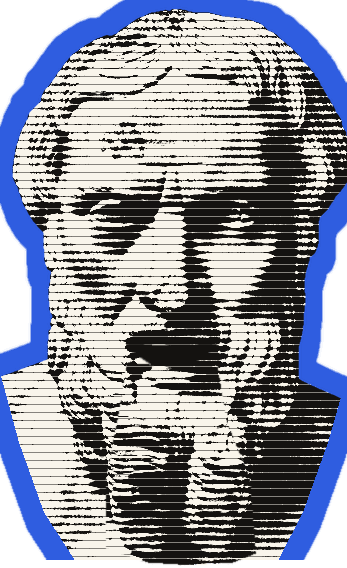
That looks like a contradiction. We’d rather say so than hide it. Every episode says at the start that AI writes what Kate and Helen say.
Our four principles
- AI is here to stay, so we have to learn to live with it. We think the way to do that is people and AI working together, each doing what it is good at. This show is one example. AI writes the scripts, makes the voices, and checks every quote and fact against its source. A person chooses the subjects, sets the rules, listens to every episode and records his own lines.
- It will get harder and harder to tell whether information is true. That is our view. So the skills for checking whether you can trust something will matter more and more. We teach those skills in the show. We start with history, because anyone can read and check history’s sources.
- The world is full of fascinating sources that few people ever read. Many are old, hard to read, or written for experts. Many are free to read, because they are in the public domain. AI lets us open them up for people who would never have found them.
- We think AI can make excellent work. Merriam-Webster’s word of the year for 2025 was slop: low-quality content made in quantity with AI. We want the opposite. We use the newest AI models we can get, and we keep trying new ways to get more out of them. When an episode falls short, we make it again: episode 1’s script has changed more than 30 times.
It is already hard. In Ofcom’s 2026 research, 52% of teenagers said they felt confident they could recognise content made by AI. When Ofcom tested them, a quarter of those confident teenagers could not pick out the image made by AI.
What AI makes, and what is real
Made with AI
- The scripts.
- The voices of Kate and Helen.
- The voices of the people from history.
Real
- The people from history. They really lived, apart from Merlin, a character in Geoffrey of Monmouth’s book.
- Every word the people from history say. Each one is really written down in an old source.
- The sources on this site, with a link to each one.
- Will. He runs the show, listens to every episode and records his own lines.
So the name has a tension of its own. In History Talks Back, AI makes the voices. The words they say are real.
Children already use AI
In May 2026, Ofcom reported that over half of UK children aged 8 to 17 use AI. The figure was 56%, and two-thirds (66%) of 16 and 17 year olds. Ofcom also found that “few questioned their accuracy”.
Source: Ofcom, our latest look at UK children’s media lives, 21 May 2026.
We expect children growing up now to use AI far more than any of us did. So we think the useful question is how they use it.
AI gets things wrong, and sounds just as sure
We know this from our own scripts. Before an episode goes out, we check every quote against its source, and every fact against our list of sources. And people listen. We caught the AI getting these wrong:
- The AI wrote that the story of the Marathon runner who brought the news and dropped dead first turns up five hundred years after the battle. Plutarch did write it then. But Plutarch names an older writer, Heraclides, from about a hundred and fifty years after.
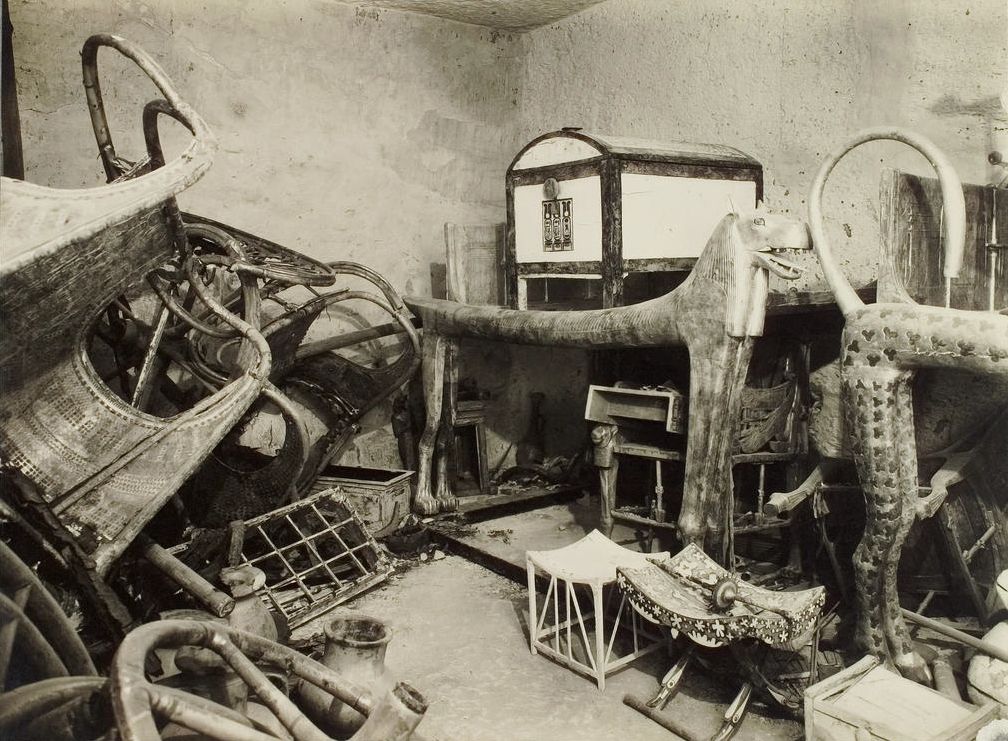
- The AI told Howard Carter’s two accounts of the tomb as if he had changed his story: “Yes, it is wonderful” in his diary, “Yes, wonderful things” in his book. A listener pointed out that they say the same thing. The two records agree.
- In a draft, the AI wrote that each person from history wrote every word they say. But Howard Carter wrote down Lord Carnarvon’s question. And the tomb robbers’ words are in a court record.
The wrong lines read just as smoothly as the right ones. We found two by checking the sources, and one because a listener told us.
So we teach children to check
We don’t think keeping children away from AI is the answer. We think the answer is to teach them to check it.
In the show, we ask three questions of every source:
- Who wrote it?
- When did they write it?
- Were they there?
With AI, we add two more:
- Where did it get that?
- Can I read the source myself?
You can check us too
We link every word from history in an episode on this site, so you can read the original. We list every source for the hosts’ facts too, with the lines we used. AI checks every quote and fact against its source before an episode goes out, and Will listens to every episode. Will doesn’t check every source by hand. But you don’t have to take the AI’s word for it either. Every source is linked, so anyone can check any line they doubt. And you can check us.
A translation is a source too. When a person from history wrote in Latin, Greek or ancient Egyptian, we name the translator and the year. Translators can get a word wrong. In episode 2, Herodotus wrote the Greek word for natron, a kind of salt. A. D. Godley’s English, from 1920, says “saltpetre”, which today usually means a different salt.
Why history is the place to practise
History is full of sources. Many are hundreds of years old. Many are in the public domain, so anyone can read them free. And they often disagree.
In episode 1, Geoffrey of Monmouth’s story says Merlin brought Stonehenge’s stones from Ireland. William of Newburgh, writing about 60 years later, said Geoffrey made things up. Children can weigh one source against another and decide for themselves.
What “use your own mind” means here
AI is a tool. You can use it to find things out. Then you check what it told you, and you decide what to believe.
That is the idea behind Use Your Own Mind, the name we make the show under.