
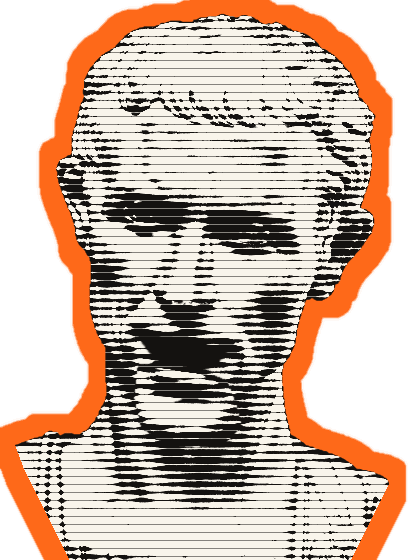
Episode 4: Did Julius Caesar conquer Britain?
Listen
0:00 / 14:24


In this version, Will’s lines are an AI copy of his voice. He will record them himself.
Your real score
If you like it, give us five stars wherever you listen. Here, give us your real score, and we’ll try to get it up.
Out of 10.
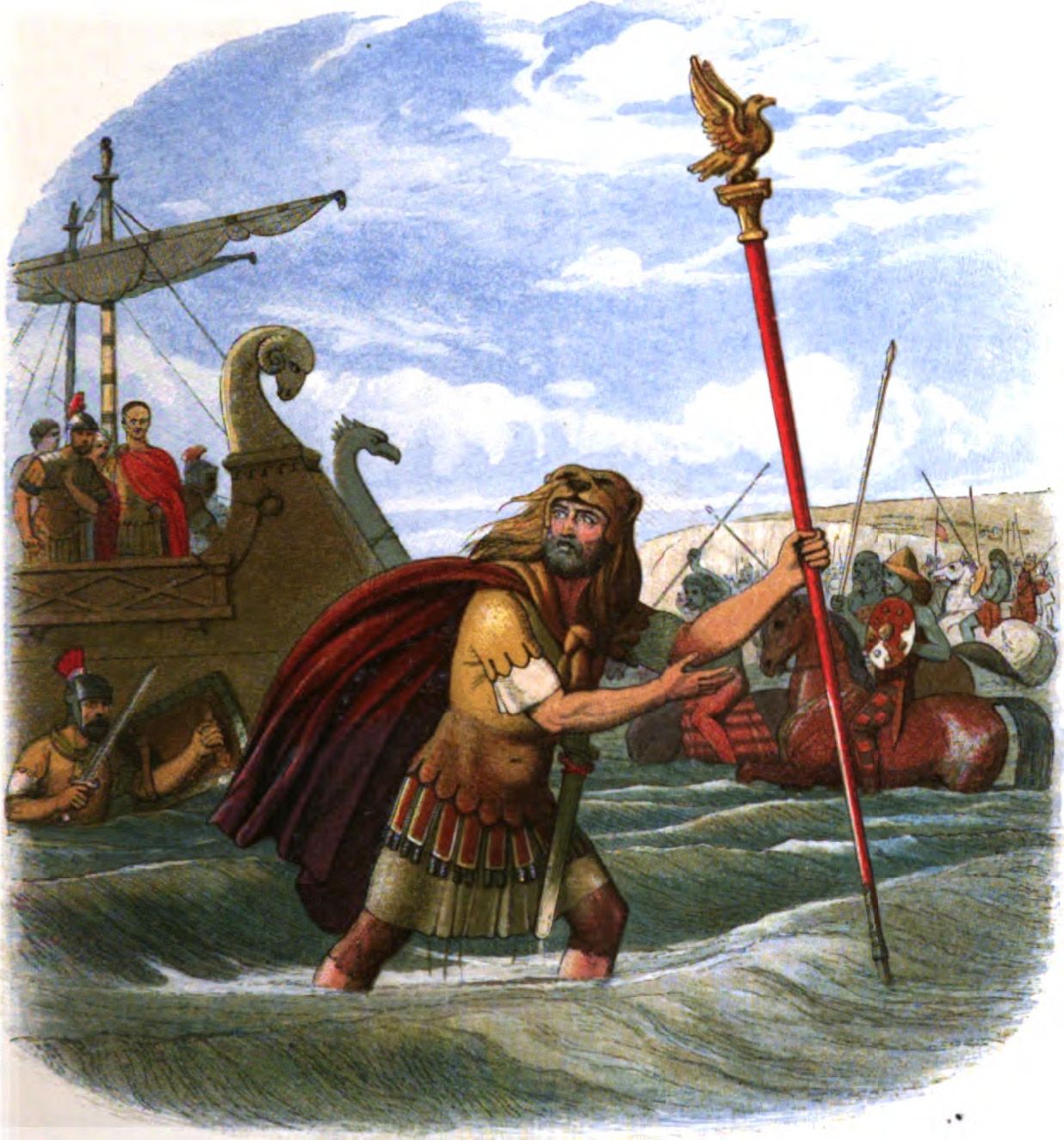
In this episode, Julius Caesar sailed to Kent in 55 BC, a Roman soldier jumped into the sea holding a golden eagle, and a full moon wrecked the Roman ships. Most of the words come from Caesar’s own book about his war. The rest come from a letter by Cicero, from a Roman writer called Tacitus, and from Edmond Halley, an astronomer who worked out the day Caesar landed.
Each of these is a source. A source is anything from the past that tells us about it. Historians check every source with three questions. Caesar’s book passes all three, so this episode asks a fourth: who is the hero of the story? Most of these sources were first written in Latin, so there is one more question: who translated it, and when?
Word hunt
Every source below has a word to find. Open the source, find the word, then come back and tap “I found it” to see something this episode had no time for.
If the page doesn’t jump to the word, search for it. On a computer, press Ctrl+F, or Cmd+F on a Mac. On a phone, choose Find on Page from the browser’s menu.
You’ve found 0 of 6 words.
Julius Caesar
- Who wrote it?
Julius Caesar himself, a Roman general. He wrote a book about his own wars in Gaul, which is where France and Belgium are today, and about his two visits to Britain. He writes about himself as “he” and “Caesar”, as if someone else were telling the story.
- When did they write it?
He sent his reports to Rome in 55 BC, the same year as the landing. That is more than 2,000 years ago.
- Were they there?
Yes. He was in charge. He sailed with his soldiers, and saw the cliffs and the beach for himself. That makes him a very good witness.
But ask a fourth question: who is the hero of his book? The Britons left no writing, so the first written account of the people of Britain is Caesar’s, told from his side.
- Who translated it, and when?
H. J. Edwards, in 1917. Caesar wrote in Latin, and Edwards turned it into English.
Another translation, by W. A. McDevitte and W. S. Bohn in 1869, is on the Perseus website. Translators choose different words for the same Latin, so it is worth reading two.
What you heard
he could discover neither the size of the island, nor the number or the strength of the tribes inhabiting it,
Volusenus observed all the country so far as was possible for an officer who did not dare to disembark
there beheld the armed forces of the enemy displayed on all the cliffs.
All the Britons, indeed, dye themselves with woad, which produces a blue colour, and makes their appearance in battle more terrible.
They wear long hair, and shave every part of the body save the head and the upper lip.
Then our troops exhorted one another not to allow so dire a disgrace, and leapt down from the ship with one accord.
This one thing was lacking to complete the wonted success of Caesar.
That same night, as it chanced, the moon was full, the day of the month which usually makes the highest tides in the Ocean, a fact unknown to our men.
a greater dust than usual was to be seen in that quarter to which the legion had marched.
to run along the pole, stand on the yoke, and then, quick as lightning, to dart back into the chariot.
the senate decreed a public thanksgiving of twenty days.
Hard words: inhabiting means living in. beheld means saw. disembark means get off a ship. woad means a plant, used for blue dye. save means except. exhorted means urged. dire means terrible. with one accord means all together. wonted means usual. as it chanced means as it happened. quarter means direction. pole means the long wooden bar between the two horses. yoke means the bar across the horses’ necks. decreed means ordered.
Read it yourself
- Caesar lands in Kent, in Edwards’s EnglishLacusCurtius, University of Chicago
This is Edwards’s English, from 1917, on a website called LacusCurtius. The page says it is in the public domain, so anyone may copy it.
Word hunt: find this word in the source
the moon was full
Where it is: Book 4, chapter 29. The landing starts in chapter 23. Chapter 31 tells you how Caesar mended his ships.
What we had no time for. To mend the rest of his ships, Caesar used the wood and the bronze from the ships that were most badly broken.
One thing to notice. The small numbers like p219 are the page numbers of the printed book. The notes at the bottom of the page say where the editor thinks each place is: “About Dover”, and “Probably between Walmer and Deal”.
- What the Britons looked like, in Edwards’s EnglishLacusCurtius, University of Chicago
The same translation, from the next part of the book, about Caesar’s second visit, the year after.
How to find the words
- Where it is
- Book 5, chapter 12. What the Britons looked like is in chapter 14.
- Search for
- hare, fowl, and goose
- One thing to notice
- Fowl here means chickens. Caesar says the Britons wouldn’t eat them. Find the words he uses for why they kept them.
- The same night, in another translationPerseus Digital Library
W. A. McDevitte and W. S. Bohn’s English, from 1869, on the Perseus website.
How to find the words
- Where it is
- Book 4, chapter 29.
- Search for
- against each other
- One thing to notice
- Edwards says the storm was “buffeting” the ships at anchor. McDevitte and Bohn say it began “to dash” them “against each other”. Two translators, one Latin sentence.
Be a historian
- Caesar was there, and he sent his reports to Rome the same year. Ask the three questions. Then ask a fourth: who is the hero of his book? Does that change how much you trust it?
- The Britons didn’t write anything down. If they had, what do you think they would have said about the Romans landing on their beach?
The eagle-bearer
- Who wrote it?
Not the eagle-bearer. Caesar wrote down what he shouted, in his book.
- When did they write it?
He shouted it in 55 BC, on the day the Romans landed. Caesar sent his reports to Rome the same year.
- Were they there?
The eagle-bearer was there: he shouted the words. Caesar was there too: he was in charge.
- Who translated it, and when?
H. J. Edwards, in 1917, from Caesar’s Latin.
What you heard
Leap down, soldiers, unless you wish to betray your eagle to the enemy;
it shall be told that I at any rate did my duty to my country and my general.
Hard words: leap down means jump down. betray means give away. at any rate means anyway.
Read it yourself
- The eagle-bearer jumps, in Edwards’s EnglishLacusCurtius, University of Chicago
Edwards’s English, from 1917, on LacusCurtius.
Word hunt: find this word in the source
eagle-bearer
Where it is: Book 4, chapter 25.
What we had no time for. Caesar never tells us the eagle-bearer’s name.
One thing to notice. Just before he jumps, the eagle-bearer says a prayer. Find what he asks the gods for.
- What the eagle was, from Cassius DioLacusCurtius, University of Chicago
Cassius Dio’s Roman History, in Earnest Cary’s English, from 1914, on LacusCurtius.
Word hunt: find this word in the source
golden eagle
Where it is: Book 40, chapter 18.
What we had no time for. Dio says the pole ended in a sharp spike, so it could be stuck firmly in the ground.
One thing to notice. Dio says every legion had an eagle. Find how many men carried it.
Be a historian
- Caesar doesn’t tell us the eagle-bearer’s name. Why might a writer leave out the name of the bravest person in his story?
- The eagle-bearer jumped first, so the others would follow. Can you think of a time when one person going first made everyone else brave enough to do something?
Edmond Halley
- Who wrote it?
Edmond Halley, an English astronomer. Halley’s Comet is named after him. He wrote a paper working out the day Caesar landed in Britain.
- When did they write it?
He read it to the Royal Society on 22 January 1690. That is more than 300 years ago, and more than 1,700 years after Caesar.
- Were they there?
No. Halley lived more than 1,700 years after Caesar. He worked the date out from what Caesar wrote about the full moon, and from the moon itself.
- Who translated it, and when?
Nobody: Halley wrote in English. We read his paper in a magazine, The Gentleman’s Magazine, which printed it again in 1773.
What you heard
the landing on Britain was August 26, in the afternoon,
Read it yourself
- Halley works out the day, as printed in 1773Internet Archive
The words of an old book, read by a computer from a scan, on a website called the Internet Archive. Some letters come out wrong: look for words like “full-uioon”, where the computer misread “moon”.
Word hunt: find this word in the source
August 26
Where it is: Article XIII, “An Attempt to prove the precise Day when Julius Caesar made his first Descent upon Britain”.
What we had no time for. Halley says Caesar reached Britain between nine and ten in the morning.
One thing to notice. Halley counts back four days from the full moon. Find the night he says the moon was full.
Be a historian
- Halley wasn’t there, but he found a date that Caesar never wrote down. How can someone who wasn’t there still find out something new?
- Halley’s date depends on Caesar being right about the full moon. If Caesar had got that wrong, what would happen to Halley’s date?
Cicero
- Who wrote it?
Cicero, a Roman writer. This is from a letter to his friend Trebatius, who was going to join Caesar’s army.
- When did they write it?
In the spring of 54 BC, before Caesar’s second visit to Britain. That is more than 2,000 years ago.
- Were they there?
No. Cicero wasn’t in Britain, and he says so himself: “I am told”.
- Who translated it, and when?
Evelyn S. Shuckburgh, in his book The Letters of Cicero, in 1908. Cicero wrote in Latin.
What you heard
In Britain I am told there is no gold or silver.
If that turns out to be the case, I advise you to capture a war-chariot and hasten back to us at the earliest opportunity.
Hard words: hasten means hurry. turns out to be the case means is true. at the earliest opportunity means as soon as you can.
Read it yourself
- Cicero’s letter, in Shuckburgh’s EnglishInternet Archive
The words of Shuckburgh’s book, read by a computer from a scan, on the Internet Archive. Some letters come out wrong.
Word hunt: find this word in the source
war-chariot
Where it is: Letter CXXXVI, “To C. Trebatius Testa (on his way to Gaul)”.
What we had no time for. In another letter to the same friend, Cicero tells him to look out, while he is in Britain, that the charioteers don’t trick him.
One thing to notice. Cicero says there is no gold or silver in Britain. Find what he tells his friend to bring home instead.
Be a historian
- Cicero says “I am told”. Who might have told him? How would you check?
- Cicero is joking with his friend. How can you tell when a source is joking?
Tacitus
- Who wrote it?
Tacitus, a Roman writer, in his book about the life of a Roman called Agricola.
- When did they write it?
After AD 96, about 150 years after Caesar came to Britain. So it is more than 1,900 years old.
- Were they there?
No. Tacitus wrote about 150 years later. He is telling us what he thought of Caesar, looking back.
- Who translated it, and when?
Alfred John Church and William Jackson Brodribb, in 1876. Tacitus wrote in Latin, and they turned it into English.
What you heard
must be regarded as having indicated rather than transmitted the acquisition to future generations.
Hard words: regarded means thought of. indicated means pointed out. transmitted means handed on. acquisition means the thing gained: here, Britain. future generations means the people who came later.
Read it yourself
- Tacitus on Caesar, in Church and Brodribb’s EnglishPerseus Digital Library
Church and Brodribb’s English, from 1876, on the Perseus website.
Word hunt: find this word in the source
indicated
Where it is: Chapter 13.
What we had no time for. Before he says Caesar only pointed Britain out, Tacitus gives him credit: Caesar won a battle, frightened the people who lived in Britain, and took the coast.
One thing to notice. Tacitus calls Caesar “the very first Roman who entered Britain with an army”. Is that the same as conquering it?
Be a historian
- Caesar says he won the battle on the beach. Tacitus says Caesar only pointed Britain out. Can they both be right?
- Tacitus wasn’t there. Why might a writer 150 years later see something that Caesar couldn’t?
The links on this page go to other websites, where the sources are. Ask a grown-up before you visit them.
For grown-ups: every source for this episode, with full citations.
Tell us what you think of this episode
Will reads every message. Next week’s episodes can change because of what you say, so tell us what you liked, what confused you and what you want to hear about. If you are a child, ask a grown-up to send it.