
See it for real
Lots of things from our episodes are in museums, or out in the open air. Every place here is free to get in. Here’s where to go, and something to look for when you get there.
We checked every place on 10 November 2026. Opening times change, and rooms sometimes close for a while, so look at the website before you go.
Episode 1: What was Stonehenge for?
Woodhenge, near Amesbury, Wiltshire
Free, in daylight. English Heritage looks after it. There’s a free car park next to it, across the road.
Look for: the concrete markers. Each one shows where a wooden post once stood.
Woodhenge, at English Heritage
Durrington Walls, next to Woodhenge
Free, from dawn to dusk. The National Trust looks after it. The people who built Stonehenge probably lived here. In episode 1, archaeologists found the bones of their pigs here, left over from midwinter feasts.
Look for: the huge round bank. The National Trust says the henge is 500 metres across.
The Stonehenge Landscape, at the National Trust. There’s no car park here, but Woodhenge’s car park is close by.
The walk towards Stonehenge
For good walkers. The National Trust has a walk that starts at Woodhenge, crosses Durrington Walls, and goes up the Avenue, uphill towards Stonehenge. It’s 5 miles and takes about two and a half hours. The National Trust calls it challenging. Only assistance dogs are allowed. To go up to the stones themselves, you need a ticket from English Heritage.
The walk, from the National Trust
Avebury, Wiltshire
Free, in daylight. Avebury has stone circles inside a henge: a bank and a ditch all the way round. The National Trust car park charges.
Look for: the bank and the ditch. Then count the stones.
West Kennet Long Barrow, near Avebury
Free. It’s a tomb, built around 3650 BC. That’s more than 1,000 years before the stone circle at Stonehenge. Park in the lay-by on the A4, then walk half a mile uphill.
West Kennet Long Barrow, at English Heritage
The British Museum, London: Room 51
Free. You can book a free ticket online, or just turn up.
Look for: the Folkton Drums, carved from chalk between 2500 and 2000 BC, around the time the stone circle at Stonehenge went up. They’re in Room 51, case 6.
The Folkton Drums, at the British Museum
Episode 2: Who got to Tutankhamun first?
World Museum, Liverpool
Free. A real tomb robbers’ confession is on show here, written on papyrus. The robbers owned up to stealing from the tomb of a king called Ramesses VI. His tomb is next to Tutankhamun’s.
Look for: Papyrus Mayer B, in the Ancient Egypt gallery on Level 3.
Papyrus Mayer B, at World Museum
The British Museum, London
Free. You can book a free ticket online, or just turn up.
Look for:
- The Prudhoe Lion, in Room 4. Tutankhamun’s words are carved on its base. They say he renewed it, for an older king called Amenhotep III. Room 4 is closed from 11 to 22 January 2027.
- Mummies in Rooms 62 and 63, including a cat.
- In Room 64, a man who became a mummy naturally, before the Egyptians learned to make mummies.
The Prudhoe Lion, and the mummies’ rooms, at the British Museum
More mummies, free, around the UK
- The Fitzwilliam Museum, Cambridge. In Gallery 19: coffins, a wrapped mummy, a dog’s coffin, and canopic jars, which held the body’s insides. Closed on Mondays. Gallery 19
- The National Museum of Scotland, Edinburgh. From a grave at Qurna, about 1600 BC: a woman’s coffin and a child’s coffin, in the Ancient Egypt Rediscovered gallery. Open every day. The Qurna burial
- The Ashmolean Museum, Oxford. In Gallery 24, the mummy of a man called Djed-djehuty-iuef-ankh, from about 770 to 712 BC. Open every day. The Ashmolean
- The Petrie Museum, London. Portraits painted to go with mummies, found at a place called Hawara. Open Tuesday to Saturday, 1pm to 5pm. Children under 16 must come with an adult. The Hawara portraits
Episode 3: Who really ran from Marathon?
The British Museum, London: Room 69
Free. Room 69 has prize jars from the games at Athens, painted with athletes, like the jar on our episode 3 page. One shows three runners racing. Room 69 is closed until 13 November 2026.
Look for: the runners, with their arms swinging.
The footrace jar, at the British Museum. It was on show in Room 69 in 2024. Ask at the desk if you can’t find it.
Episode 4: Did Julius Caesar conquer Britain?
The British Museum, London: Room 50
Free. Room 50 is about Britain and Europe from 800 BC to AD 43, the year the Romans came back to stay. It has the Battersea Shield: the bronze front of a shield, made between about 350 BC and 50 BC, and found in the River Thames at Battersea, in London. So it was made in the years when Caesar came to Britain, or before.
Look for: the red glass studs. There are twenty-seven.
The Battersea Shield, at the British Museum. It was on show in Room 50, case 17, in October 2026.
Samuel Pepys and the Great Fire
The National Portrait Gallery, London
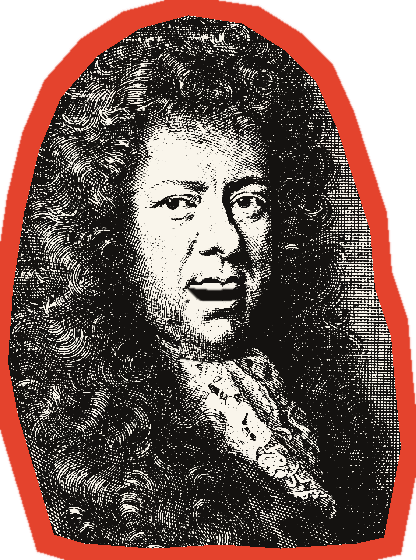
Free, every day. The portrait of Pepys on our website is here, in Room 6 on Floor 3. John Hayls painted it in 1666, the year of the Great Fire. Pepys wrote in his diary about sitting for it.
Look for: what he’s holding in his hand.
Samuel Pepys, at the National Portrait Gallery
The London Museum, Smithfield, London
Opens on 28 November 2026. Free. The museum says it will have storytelling and performance about the Great Fire. In the first few weeks, it’s best to book ahead.
Worth knowing
- Going in among the stones at Stonehenge needs a ticket.
- Pepys’s real diary is kept in the Pepys Library, at Magdalene College in Cambridge. It’s closed for building work until 2027.
The links on this page go to other websites. Ask a grown-up before you visit them.