How we make it
We show our working. Open any step to follow one real line through it.
One line, nine steps
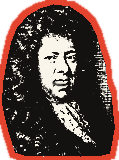
A person and AI models make every episode together, in the same order each time. The line comes from the trailer. Samuel Pepys wrote it in his diary on 4 September 1666, as the Great Fire of London came closer: “and I my Parmazan cheese”.
- 1. The story is chosen
- Claude, an AI model made by Anthropic, suggests many of the stories. Season 1 follows the history children learn at primary school in England, at Key Stage 2, one episode a week. Will, a real person, checks every story and sets the rules every script follows.
See it with Pepys’s cheese
The first three stories are Stonehenge, Tutankhamun’s tomb, and the run from Marathon. The trailer uses a moment from Pepys’s diary to show that the words from history are real.
- 2. Claude finds the sources
- Claude does the research and the writing agentically. It gets the job and the rules, then works through them by itself, step by step. It searches free online libraries, such as Project Gutenberg and the Internet Archive, for the old books, diaries and letters behind the story, and reads them. Where a fact comes from Wikipedia, Claude follows Wikipedia’s own sources back to the original, and the episode’s page shows what it found.
See it with Pepys’s cheese
Claude found the entry in Project Gutenberg’s copy of the diary, edited by Henry B. Wheatley in 1893:
“Sir W. Batten not knowing how to remove his wine, did dig a pit in the garden, and laid it in there … And in the evening Sir W. Pen and I did dig another, and put our wine in it; and I my Parmazan cheese, as well as my wine and some other things.”
- 3. Claude writes the script
- Claude writes what Kate, Helen and Will say. The people from history say only words that were really written down: their own, or words someone wrote about them, 30 words at most at a time. The facts the hosts say come from the sources on the episode’s page.
See it with Pepys’s cheese
Helen: Like Samuel Pepys, burying his cheese in the Great Fire of London.
Pepys: And I my Parmesan cheese.
Kate: A fire’s coming, and he’s saving the cheese.
Pepys’s line is five of his own words. Our Pepys says “Parmesan”, the modern spelling of his “Parmazan”.
- 4. The words are checked
- A checking tool fetches each original and looks for every quoted line in it, word by word. Old spellings count as a match. Then Jev reads every sentence Kate, Helen and Will say beside the episode’s sources. Jev is a marking model made by TypeSafe, a different company from the one that makes Claude, so the model that checks is not the model that writes. A sentence passes if a source states it. One that explains a word, or says something everyone knows, passes too. Claude fixes whatever fails, and the checks run again.
See it with Pepys’s cheese
The quote check found all five of Pepys’s words in the diary, in order. Jev read Helen’s line beside the diary and answered that the source states it, 94 in 100 sure. It gave the same answer for Kate’s line, 90 in 100 sure.
- 5. The boredom test
- Jev also marks the script the way a family in the car would hear it. For every 30 seconds, it marks four things: something to picture, wanting to know what comes next, feeling something, and whether a ten-year-old can follow it. It marks the jokes too. Each mark is out of 3, and an episode needs an average above 2.1.
See it with Pepys’s cheese
These are Jev’s marks for the part of the trailer that starts with Pepys’s line.
Something to picture 3 Wanting to know what comes next 3 Feeling something 2 A ten-year-old can follow it 2 Funny 2 Average 2.4 - 6. The voices
- ElevenLabs’ voice model performs the script: Kate, Helen, and every person from history. Kate and Helen aren’t real. The people from history were, but only their words are real, and their voices are made with AI. Will records his own lines. Where his recording isn’t right yet, an AI copy of his voice, made with ElevenLabs, says the line, and the episode’s page says so.
See it with Pepys’s cheese
Helen, Pepys and Kate are all voices from ElevenLabs. No recording of Pepys’s own voice exists.
- 7. The music and sounds
- ElevenLabs’ music model made the theme tune. Its sound-effects model makes the sounds under some scenes, such as the wind on Salisbury Plain. Will approves each episode’s sound effects before it goes out.
See it with Pepys’s cheese
Under Helen and Pepys, listen for a fire. The sound-effects model made it from a description of a city on fire in 1666. Its loudest crackles are kept below the voices, so they never drown a word.
- 8. The sound is checked
- ElevenLabs’ Scribe model writes down what the recording says, and a tool checks it against the script, word by word, so nothing is missing or added. Code measures the pauses, each voice’s loudness, and any clicks.
See it with Pepys’s cheese
The script: And I my Parmesan cheese.
Scribe heard: And I, my Parmesan cheese.
Every word is there, and nothing extra.
- 9. Will decides
- Will listens to every episode. When something sounds wrong, he says what, and only the lines that change are recorded again. An episode goes out only when every check passes and Will is happy with it.
See it with Pepys’s cheese
In the first version, Helen said “Priorities” before Pepys’s line, and it ran into his first word. After his line, a spade dug, though nobody had said he dug anything. Will heard both. The spade came out, and Helen’s and Kate’s lines were written again. Only those lines were recorded again.
Does a person check everything?
No. Will listens to every episode from start to finish, and he decides what goes out. But he doesn’t check each fact himself. In episode 2, Kate, Helen and Will say 299 sentences. 149 of them state a fact or explain a word, and each of those needs a source. There are also 21 quotes from history. The script changes many times before an episode goes out, and the checks read every quote and every fact again after each change. A person checking by hand would have to read them all again each time. The tools check every quote and every fact. Will listens for what a tool can’t hear, such as a joke that falls flat, or a voice that sounds wrong.
What the checks can’t do
The checks show that each quote and each fact is in a source. They can’t tell whether the source is right. On the children’s pages, we ask children to judge that for themselves, with three questions: who wrote it, when did they write it, and were they there? See How to check a source.
Quotations
Some sources are modern books and web pages still in copyright. We quote them briefly, 30 words at most, and acknowledge each one in full on this site, as UK law allows for quotation (Copyright, Designs and Patents Act 1988, section 30). Kate and Helen don’t read the citations out. We give them in full on this site. Free copies come first. Where a modern book has an ISBN, we also link to it on Amazon UK.
Why we use AI to make a show about thinking for yourself